
Education · STEM enrichment
Creative Flight Lab™
Drone technology. Student-designed experiences.
A hands-on STEM pathway from curiosity to design, collaboration and visible student accomplishment. Students design with indoor drone-show technology, test ideas in software, improve their work through iteration and build toward a school-approved visible project.
- Ages 8+Recommended
- Grades 3+School-selected, grade-appropriate cohorts
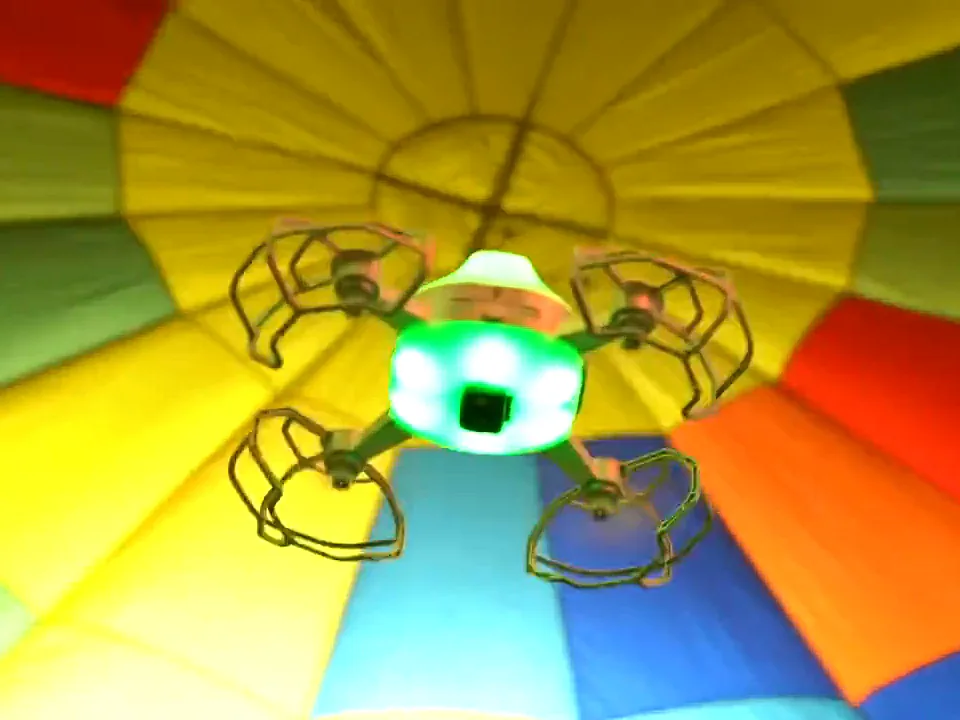
From one drone to a coordinated show.
Students learn how synchronized indoor drone shows work, then build their own ideas step by step, with a facilitator guiding each stage.
- 01
Explore
How synchronized indoor drone shows are designed, timed and staged.
- 02
Design one drone
Begin with a guided, single-drone design.
- 03
Coordinate two
Progress toward coordinated two-drone activities.
- 04
Shape the show
Work with movement, timing, color and sequencing.
- 05
Test in software
Try ideas in design software and simulation before anything flies.
- 06
Revise and explain
Refine designs, collaborate with peers and explain their design choices.
Flight activities are facilitator-led and introduced in stages; students are not expected to operate a full multi-drone performance on their own.
Skills they can see.
Every design ends in something students can watch move, which makes progress concrete.
- 01Spatial reasoning and sequencing
- 02Problem-solving and iteration
- 03Creativity and expression
- 04Collaboration and responsibility
- 05Confidence through visible accomplishments
Flexible solutions for schools.
Our educational programs can be tailored to different grade levels, schedules, and institutional goals. We offer curriculum, training, technical guidance, and project support to help schools integrate drone technology into meaningful learning experiences.
- Curriculum DevelopmentStructured lessons and activities connecting drone technology with STEM, design, and creative problem-solving.
- Educator TrainingGuidance and onboarding to help school staff facilitate drone-based learning experiences.
- Software & Technical GuidanceSupport for choreography software, equipment preparation, and program implementation.
- Educational Program FormatsOptions for workshops, mini-camps, enrichment programs, and extended learning experiences.
- Student Projects & ShowcasesGuidance for collaborative projects, choreographed formations, and school-approved presentations.
- Implementation SupportPlanning and coordination tailored to each school's objectives and available resources.
Services, resources, and implementation arrangements are determined by each school's selected program and agreement.
From digital design to a visible outcome.
- 01 · Design + simulation
Plan it in software
Students work with space, timing, movement, sequence and color, test the result in simulation and revise it.
- 02 · Live review
Facilitator-controlled review
When a design is ready, a facilitator runs it on real drones in a controlled indoor space. Students watch, compare it with the simulation and refine.
- 03 · Visible outcome
Technically reviewed, school-approved
As readiness grows, reviewed student work may contribute to a school-approved demonstration, family or STEM night, open house, celebration or other suitable school event.


A live presentation is not guaranteed for every cohort. Any flight activity is planned with the school and depends on technical review, space and approval.
Start with a mini-camp. Grow from there.
An introductory mini-camp is often the first step. Schools can then continue with longer programming. These are options to discuss, not fixed packages.
- Discuss
- Confirm fit
- Define cohort
- Mini-camp
- Review
- Decide
Length, schedule, group size and format are agreed with each school.
Adaptive Flight Lab™
A daytime program for students with special needs and disabilities, including autism and ADHD, with structured, inclusive sessions and individualized pacing.
Program details and suitability are discussed with each school or center.
Discuss an Education Partnership.
Request a program overview, discuss curriculum implementation, or explore which format suits your school.
Program details, availability and suitability are confirmed during consultation.